
The
consumer focus group of the ResPa and BioPak research projects highlighted that
although consumers view recyclability as a positive factor, they often
prioritise easy and affordable packaging solutions. The discussion showed that
consumers wish to be able to choose low-cost options while still making
environmentally responsible choices.
I
participated in the ResPa and BioPak research projects, which aim to examine
complex consumer behaviour and behavioural changes in everyday contexts, with a
focus on regulation and the consumer relationship in packaging to clarify the
consumer’s role in the circular economy.
The consumer
focus group brought together a group of people to discuss packaging solutions
that are already in use and available to consumers. The purpose was to reflect
on these solutions from a consumer’s perspective. We were presented with a
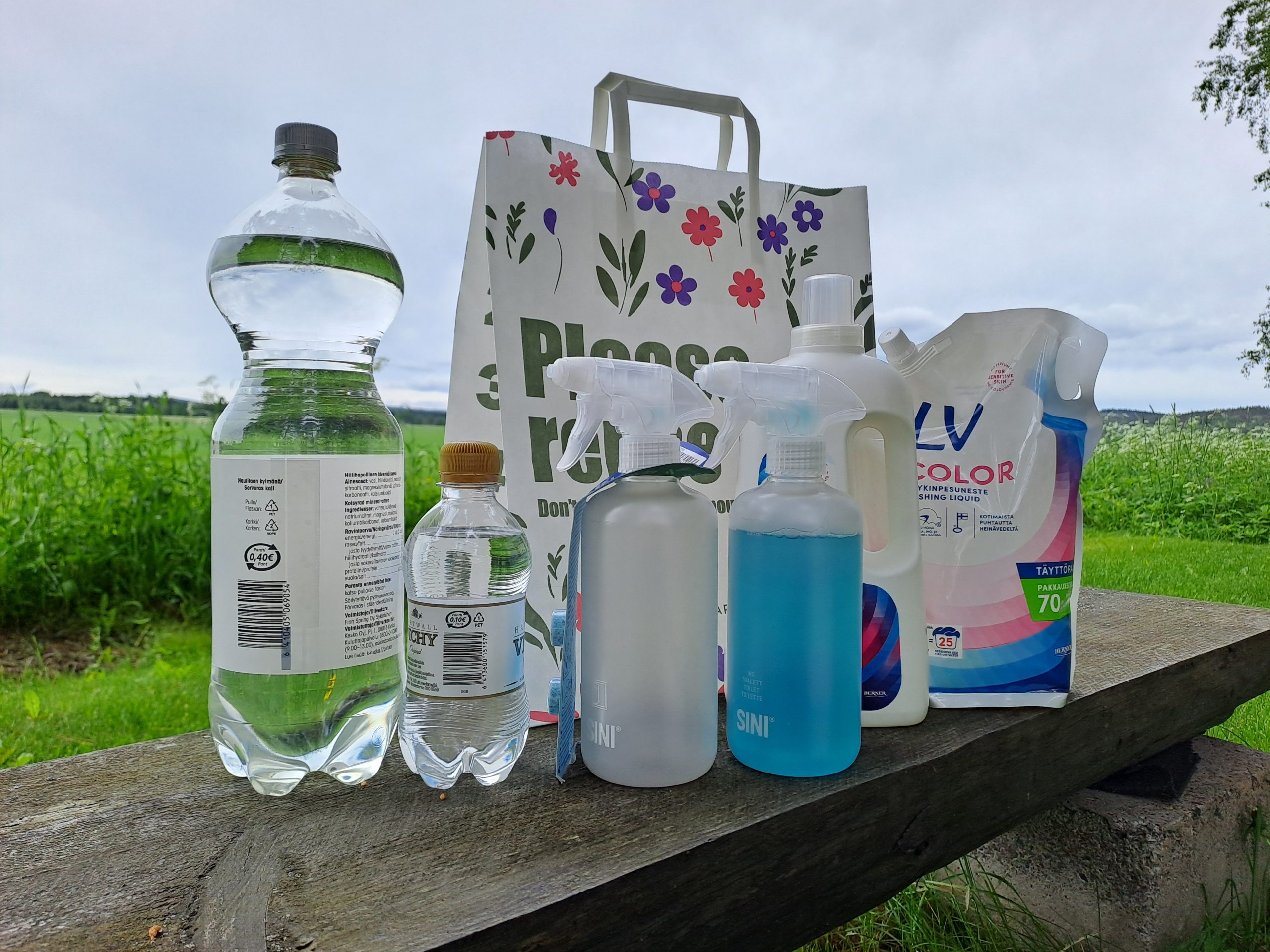
range of recyclable or reusable packaging options, such as returnable plastic
bottles, a refillable laundry detergent bottle, a detergent refill pouch, a
fibre-based grocery bag, and cleaning products in tablet form that can be dissolved
in water. The instructions were straightforward: to discuss the packaging
solutions and share our thoughts about them.
Consumers’ view on
packaging solutions
The
products and packaging were familiar to us all, both from everyday life and
from store shelves. As the discussion began, the group raised points such as
the difficulty of using refill pouches as they are: one must first buy a
package containing more plastic, which is then refilled from the pouch. The
discussion concluded that the impracticality of refill pouches and the amount
of plastic waste they cause, could be reduced even further by using a
carton-based container with a screw cap. This would eliminate the need to
purchase the initial refillable plastic package altogether, allowing consumers
to directly use a packaging option made from biodegradable biomaterial.
Detergent
tablets are familiar to dishwasher users, but the concept is now being applied
more broadly to reduce plastic waste. Packaging of a tablet requires less
material than a full bottle, and the same bottle can be reused repeatedly: the
consumer fills the bottle with water, drops in a tablet, and ends up with a
full bottle of detergent. This solution was viewed positively, but the whole
group clearly noted that the tablets must be a cheaper option than ready-made
detergent sold in bottles, for them to be the option they reach for in the
store.
Affordability
and ease of use clearly emerged as important factors for the whole group when
it comes to packaging solutions. In addition, we agreed that packaging should
clearly indicate the availability of refill pouches, so that the consumers know
to look for them in the store, rather than simply picking up the same familiar
package from the shelf.
The use of
recycled materials and the possibility to reuse packaging adds value, but if
two comparable products are placed side by side, one being more expensive but
in recyclable packaging, and the other cheaper but in single-use packaging, many
consumers – including me – will more often choose the cheaper option.
Recyclability is broadly seen as a positive factor, but affordability often
outweighs it.
Recycling in
everyday life
It was
also considered important that once the packaging eventually needs to be
recycled, the process should be made as easy as possible. For people living in
detached houses or sparsely populated areas, the nearest recycling point may be
located at a grocery store. Having to haul packaging into the car and then to
recycling stations does not encourage recycling when mixed waste can be
disposed of directly at home. Local recycling points were therefore seen as
essential.
In this
context, it was also noted by group members that if waste is not sorted and
everything is thrown into mixed waste, it becomes more expensive due to waste
management fees. Everyone in our group considered recycling important and
people want to do it, but the hope is that it would be easy — and therefore
more motivating.
Overall, the experience and discussion were positive, and I feel like the topic was both important and timely. It also prompted reflection on my own everyday choices and their broader significance. In the end, we are all consumers, using numerous products and packages every day. If packaging solutions could be beneficial for both consumers and the environment, that would be the best possible outcome.
Author: Anni Kauhanen
Photo: Nina Kukkasniemi

